 English







Adopting a holistic outlook to employee engagement: A concise handbook
What is employee engagement?
Employee engagement is an indicator of the level of enthusiasm and dedication that individuals feel toward their job. Engaged employees are in the organization for more than their paycheck. They are conscientious in the effort they put into their work and believe that their work contributes to the organization's success. This article dives deep into the basics of employee engagement in HR (Human Resources), explores why it is so crucial to organizational success and elaborates strategies to help strengthen your employee engagement initiatives. 
Chapter 1: Fundamentals of employee engagement
Business leaders looking to leverage the power of an engaged workforce must first understand what employee engagement is, its importance, and how improving employee engagement can benefit both - the employees and the organization. Hence, it is imperative to evaluate the key indicators and types of employee engagement.
Indicators of employee engagement: How do you know if your employees feel engaged at work?
Engagement in employees can be identified by the connection that they feel toward their work and their organization. Engaged employees have a clear idea of their work, are productive, and are loyal to the organization. Besides their rational and emotional connection to the organization, engaged employees are characterized by three traits:
- They speak positively about the organization to their colleagues, customers, and prospective employees.
- They are loyal to the organization even when they have other attractive opportunities.
- They work extra hard to contribute to the organization's success out of a sense of ownership.
Types of employee engagement
Employees can be engaged with the organization in different ways. The various types of employee engagement are: 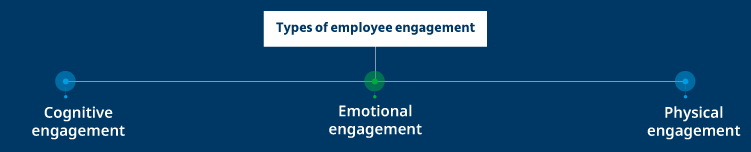
- Cognitive engagement - Cognitive engagement refers to employees knowing and engaging with the organization's overall plans. The employees are aware of what they need to do - for the organization to achieve its goals.
- Emotional engagement - Emotional engagement measures the sense of belonging and faith that the employees have in the organization and their co-workers.
- Physical engagement - Physically engaged employees are fully involved - emotionally and physically - in their work. Their physical engagement enables them to contribute fully to the organizational goals.
Chapter 2: Core pillars of employee engagement
Several factors influence employee engagement. It is essential to identify the factors that have the largest influence and steer the implementation of employee engagement strategies with an added focus. Similarly, understanding the key elements of employee engagement fuels powerful ideation and strategizing.
Factors that drive engagement at work
The drivers of employee engagement are all the workplace conditions that influence employee engagement outcomes. Business leaders need to focus their attention on these drivers while steering employee engagement initiatives at the workplace. Below is a list of major factors/drivers of employee engagement. 
- Fulfilling work: Employees aspire to work on challenging and fulfilling tasks. Employees look forward to tasks that leverage their strengths and provide opportunities to develop new skills that will help them grow as individuals and as professionals. Work engagement is enhanced when employees feel that their work furthers their long-term professional goals. Business leaders and HR teams in organizations need to match employees to roles that meet their work aspirations.
- Leadership: Employee engagement is also influenced by the quality of leadership in the organization and the prevailing team dynamics. Employees respond better to empathetic leaders, put people first, value employee contributions, and act with integrity.
- Contribution to organizational success: Employees want to work for organizations with a clearly defined strategy to achieve and sustain success. Employee engagement is enhanced when employees believe that their work contributes to organizational success. Individuals aspire to contribute to winning teams and organizations.
Every individual in the organization influences employee engagement—through the relationships they build, their influence on team engagement, and general workplace behavior. Role of decision-makers in boosting employee engagement 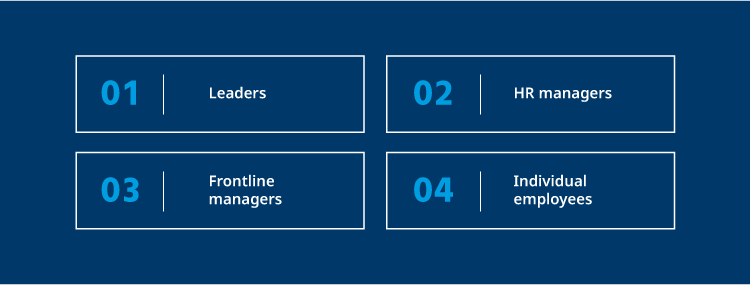
Leaders
The most critical role in creating and maintaining employee engagement is that of the organization's leaders. It is expected that they will create the vision, communicate the vision to the team, steer the employee engagement program, and then foster a culture of engagement at the workplace.
HR managers
The organization's HR team should own the process and support the leadership in ensuring the success of the engagement initiatives. The team dedicated toward employee engagement in HR should manage the daily activities related to employee satisfaction, deploy the necessary tools and processes, and guide and support the frontline managers.
Frontline managers
Frontline managers have the most pivotal role since they lead the actual engagement efforts at individual levels. They need to act as an effective medium for providing/receiving employee feedback. While implementing the organization's vision on the ground, the managers should also help in the development and growth of the teams that they lead.
Individual employees
Finally, an organization depends on its employees to provide valuable and actionable feedback, work with commitment, and build meaningful relationships with their peers and managers. Hence, it is vital to make every team member feel heard and valued. 
Key elements of employee engagement
For business owners, HR professionals, and team leaders - it is essential to be aware of the ground realities at the workplace. This awareness can be a great asset in improving morale, productivity, and engagement within the workforce. Twelve elements that are essential to enhancing employee engagement include:


Chapter 3: Why is employee engagement important?
When employees feel connected to their organization - they work harder, stay longer with the organization, and motivate their colleagues to do the same.
A study conducted by HBR found that 81% of business leaders believed that the business outcomes for their organizations are better when their employees are engaged. Engaged employees perform better at work and are also more productive. Employee engagement affects every aspect of an organization's functioning - revenue, profitability, employee turnover, and customer experience.
How organizations benefit from an engaged workforce
Employee engagement is linked to employee satisfaction and morale and is critical for the organization's success.
- Engaged employees perform better at work, are more productive, and are better aligned with the organization's values and goals.
- Employee engagement directly influences a business's productivity and financial performance.
- Talent engagement, additionally, provides other related benefits that include - enhanced employee retention, job satisfaction, lower absenteeism, and employee well-being.
Chapter 4: How to improve employee engagement
Effective communication is key to creating, driving, and sustaining any employee engagement plan. Any organization that aims to build a workforce that engages should clearly communicate its expectations, keep employees informed of its performance, transparently communicate the reward system for good performance, and institute an effective mechanism for receiving and giving feedback. Such communication creates a sense of ownership among employees and makes them feel valued and understood.

Employee engagement is challenging as it is. The COVID-19-induced lockdown had most people working remotely - making employee engagement even more challenging. The remote work mode caused employees to feel disconnected from their peers, anxious, and worried about being laid off. This affected their physical and mental health adversely. Fortunately, most firms were able to cope with this challenge since they responded well to the task of virtual employee engagement.
Many employee engagement initiatives typically rolled out in-person were adapted for remote application. This helped overcome the challenge of engaging employees remotely. In the non-virtual scenario, however, there are different strategies that can help boost employee engagement effectively.
Top 10 employee engagement strategies

Building an engaged workforce is an effective strategy for organizational success. The employee engagement strategies that help build an engaged workforce include:


Activities to promote employee engagement
Team-bonding activities are vital to increasing overall engagement at the workplace. The activities intended to promote engagement should place the employees at the center. Some activities that help boost engagement include:
- Informal get-togethers: These are opportunities for the employees to meet in an informal setting such as a workplace party, game nights, sports tournaments, and competitions - all of which help increase bonding and engagement.
- Training events: Training sessions have a reputation for being boring. It need not be so. Training can be imparted through events such as learning lunches or by bringing in a special speaker. Such strategies make training interesting, provide employees with an intellectually stimulating experience, and boost engagement.
- Recognition events: Recognition events are organized to publicly acknowledge special performances by employees. Such events motivate everyone to strive to perform better and create engagement among the employees within the organization.
- Team-building activities: Offsite activities with a mix of work and fun are a wonderful way to create a sense of camaraderie and bonding. This is a good means to get team reviews done and, at the same time, enhance engagement.
How Mercer | Mettl can help
Mercer | Mettl offers a suite of solutions to help measure and improve employee engagement at your workplace. You can explore one or a combination of the following to empower your employee engagement programs.
- High potential assessment to identify and develop your employees
- Futuristic leadership assessment to identify future leaders or measure the success of current leadership
- Training needs analysis to nurture streamlined learning and growth
- 360 View- A tool to adopt holistic feedback across organizational hierarchy
- Exit interview assessment to understand why your employees are leaving
FAQs
Why is focusing on employee engagement important for an organization?
How can an organization foster engagement among its employees?

Employee engagement is a process by which companies undertake specific activities to interact with employees and engage them. The activities include employee development, team building, skills development, trainings etc.














Get awesome marketing content related to Hiring & L&D in your inbox each week
Stay up-to-date with the latest marketing, sales, and service tips and news
By using our offerings and services, you are agreeing to the Terms of Services and License Agreement and understand that your use and access will be subject to the terms and conditions and Privacy Notice