 English






The Ultimate Guide To Assessment Centers
Introduction
An assessment center is a platform to evaluate an individual’s suitability for specific job roles. It includes several exercises like aptitude tests, personality evaluations, virtual assessment center case study simulators and interviews. It helps organizations better predict candidate performance and potential for a proposed position. A traditional assessment center involves in-person discussions and group exercises for which candidates are invited to a specific venue. With the advent of virtual alternatives, it is now possible to host such activities and interviews on digital platforms supporting remote evaluations.
On the other hand, a development center in HRM is used for organizational initiatives such as training needs identification, high-potential identification, leadership development and succession planning. While virtual assessment tests are often used for recruitment, development centers help identify professional strengths and challenges.
This comprehensive handbook dives deep into assessment centers and their key elements, their applications, process and more. You will also learn about designing an assessment development center following the best practices and using recommended tools.
Chapter 1: The fundamentals of assessment centers
Understanding ACDCs- An upgrade to assessment center method in HRM
An assessment center development center(ACDC) is a combination of an assessment center and a development center. It is a platform offering a detailed evaluation of an individual's skills, organizational fitment and developmental needs - ACDCs work by assessing candidates on various competencies required to be successful on the job.
Assessment center development centers have three primary uses:
Assessment center methods and types
Organizations employ one of the three major types of assessment centers. They are:

Traditional assessment center method
Traditional assessment centers involve a physical location. As part of the assessment process, organizations selectively send employees to a site away from their workplace, with the following objectives:
- To encourage a disconnect from the daily routine
- Building employee engagement
- Helping boost employees’ self-awareness
Alternatively, traditional assessment centers may also involve inviting job applicants to the assessment center for tests and interviews.
The traditional assessment center method
Participants in a traditional assessment center in HRM undergo several activities such as role-playing, group discussions, behavioral interviews, and business case presentations. Meanwhile, experienced assessors observe and evaluate the participants based on their demonstrative behavior.
Toward the end of each activity, assessors collate their observations and discuss each participant's performance. Once they agree on individuals’ performance, they create a report based on which participants get one-on-one feedback.
Limitations of traditional assessment center tests
Physical assessment centers are usually not feasible for all job levels, considering the stakes and costs involved. Also, traditional assessment centers can involve several logistical and operational problems. Therefore, few experts recommend this approach for a regular assessment or evaluation process.

Virtual assessment development centers
A virtual assessment development center is the online version of a traditional assessment center. It allows a holistic candidate evaluation without compromising the quality and standard set by physical assessment centers.
Virtual assessment center platforms and virtual assessment development centers accommodate a range of traditional tools used in assessment centers in a simulated virtual environment. However, wherever necessary, virtual assessors overlook the virtual assessment center activities that are conducted via assessment center software.
Virtual ACDC process
Virtual assessment and development center exercises are mapped to behavioral competencies relevant to a specific role. The exercises are administered online, followed by automated reports, eliminating logistical hassles, reducing human effort and curbing the overhead costs in conducting extensive in-person assessments.
We will discuss the applications of virtual assessment centers in Chapter 2.

Blended assessment center method
A blended assessment center method is an innovative hybrid approach that combines the best features of traditional and virtual assessment centers. It elevates the design of a traditional assessment center by combining conventional offline activities with online assessment center exercises. Resultantly, there is room for a comprehensive blended approach that supports multiple styles of learning and learners.
The process of a blended assessment center
In a blended assessment center, few competencies are mapped using online tools with life-like simulations, while the rest are assessed based on physical exercises. The physical part of the assessment remains the same. However, the total score is calculated based on the performance in both physical and virtual assessments. Ratings are compiled to provide a holistic view of the candidates after the exercises. One-on-one feedback sessions by the assessors follow this process to further development goals.
| Traditional AC | Blended AC | Virtual AC | |
|---|---|---|---|
| Scale | Not scalable | Partially scalable | Fully scalable |
| Logistics | Extreme logistical hassle | Limited logistical hassle | Zero logistical hassle |
| Ease of management | Time-consuming | Less time-consuming | Least time-consuming |
| Cost | Highly Expensive | Medium expense | Least expensive |
| Best suited for | Senior leadership | Leadership, senior & mid-management | Mid-management, junior management, IC roles |
What are the advantages and disadvantages of assessment centers?
The most significant benefit of assessment centers is that they are accurate predictors of performance since candidates attempt tasks closer to real work situations. This provision offers both the assessors and the candidates an accurate picture of what may lie ahead. Thus, assessors can make better hiring decisions, and candidates gain a more realistic insight into their roles, ensuring a long employment association.
The only disadvantage is that designing a candidate assessment center involves creating customized assessment development center exercises for every organization and job role, which can be a trifle lengthy process because of multiple stakeholders' involvement.
Chapter 2: Applications of assessment centers
As hinted in the first chapter of this guide, assessment center tests and exercises are used for three primary purposes: to predict future behavior to make better talent decisions, diagnose development needs, and groom potential employees.

The applications of various forms of assessment centers include:

Using ACDCs for Hi-Po identification
Assessment centers and development centers help organizations identify and develop high-potential employees who can assume additional responsibilities and drive growth. They ensure objective evaluations via real-life workplace scenarios.

Identifying professional training needs to bridge the skill gaps
The role of an assessment center in training and development pans out across hierarchies. To bridge the skill gaps, assessment development centers enable organizations to identify training areas for their current employees and take adequate initiatives to develop their workforce’s skills. Besides, assessment center development centers provide employees and organizations with concrete data on improvement areas. Moreover, the ACDC’s insights serve as a benchmark to further employee training and development.

Leadership development
Assessment centers in human resource management have proven to be an extremely insightful tool to develop professionals in leadership roles. The predictive capabilities of development and assessment center tests can help deploy exercises that test leadership competencies relevant to a specific industry or organization.
Qualities to test before selecting future leaders through the assessment centre include responsiveness to change, ability to command the respect of their peers, critical thinking and risk-taking appetite. Through a series of simulation exercises, these qualities can be tested using the assessment centre.

Leadership hiring
Regular assessment center methods in HRM can also be customized into leadership assessment centers that enable organizations to hire exclusively for leadership roles. Leadership assessment centers measure key leadership attributes like ethics, civic-mindedness, innovation, team development abilities, self-development awareness, ability to negotiate and influence, etc. In most cases, assessment centers are designed to simulate day-in-the-life experiences in fictitious organizations. This helps observe candidates and their behavior in fictitious leadership roles. The insights can be immensely helpful in making the right leadership hiring decisions.

Succession planning
Feedback from assessment center HR helps organizations identify whether they can handle the challenges offered in the next higher position. They act as a catalyst for change, as leaders learn about the gaps between their mindsets and skills and what is required to lead effectively. At an organizational level, this information can target specific growth and development programs. This can lead to important information for succession planning by allowing the organization to assess whether it has the number of employees required to move into key roles in the future.
Chapter 3: Assessment center methods: Vital steps in the process
Assessment and development centers can address an organization’s most learning and development needs if implemented correctly. Hence, one must understand the various steps involved in rolling out the process.
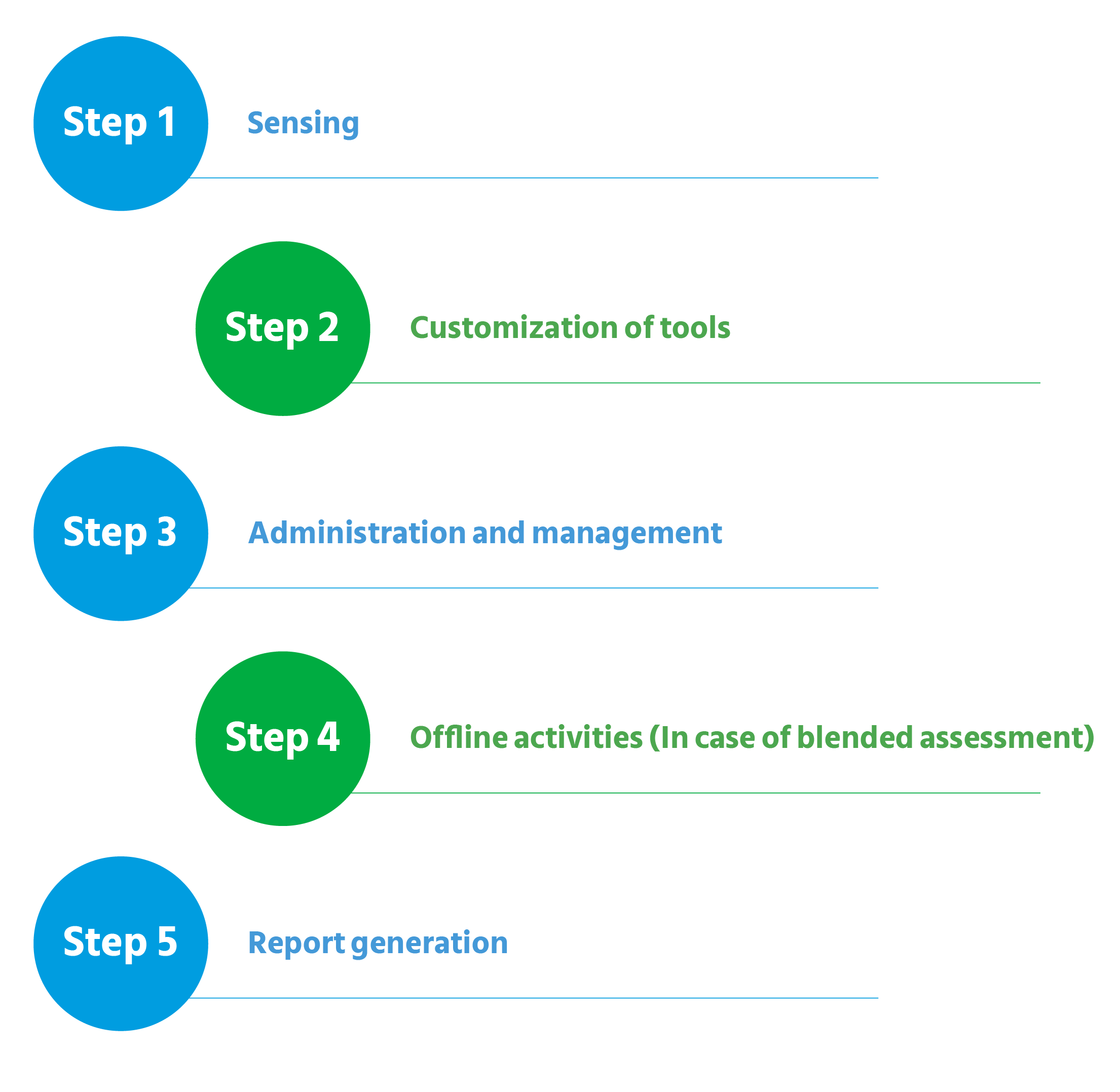
Step 1: Sensing
The sensing exercise is divided into three core phases:
Sensing phase 1: Defining the objective
Organizations should have clarity about why they want to use an assessment center development center. Concerning the various applications and possibilities elaborated in the previous chapter, an ACDC can be employed for more than one objective. A clear goal ensures that the rest of the steps follow without challenges. Choosing a type from the various assessment center examples, shortlisting the assessment and development center exercises, designing the type of questions, etc., all depend on the goal of an assessment center process.
Sensing phase 2: Underlining the job levels
The methods to assess and develop individual contributors, first-time managers, mid to senior-level management, and leadership positions vary. Ideally, the exercises must accurately reflect the variety and demands of the target role. Also, subject matter expertise is critical to establish better-suited roles for a particular assessment center technique.
Sensing phase 3: Choosing a competency framework
If organizations need to identify the skills required by the workforce to be effective in a target role, they should begin by analyzing the factors that aid employee performance. For example, competencies such as problem-solving skills, collaboration and creativity may be essential for a certain job role. However, competencies such as adaptability, strategic vision and people skills may be a priority for another job role. Hence, setting up a relevant, role-specific competency framework is crucial for the success of an assessment center process.
Sensing phase 4: Mapping competencies to relevant tools
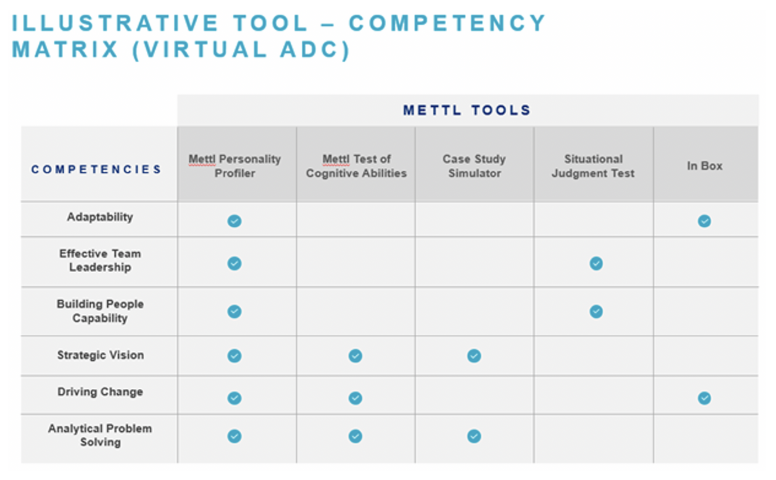
Subject-matter experts specializing in assessment center tools and activities can help correlate various competencies to relevant assessment center exercises.
Exercises for an assessment center in HR can include situational judgment questions, personality, cognitive tools, case studies, group discussions, role-plays and various other simulation tools, online and offline. However, your assessment and development plans would fail to deliver quality results if you do not have in-depth knowledge of these tools.
Here’s an example of competency-tool mapping in a virtual assessment center development center:
Step 2: Customization of tools
After the completion of the first three sensing phases, experts customize the assessment center tools to match the organization’s requirements. After evaluating and validating these customizations, the company is ready to roll out the assessment development activities.
Step 3: Administration and management
This step involves the deployment of resources, setting up the systems and appointing assessors. The logistics and duration of this step depend on the type of assessment center chosen by the organization. A physical assessment center’s administration and management requirements vary significantly from its virtual counterpart or a blended ACDC alternative.
Step 4: Offline activities (In case of blended assessment)
On the day of in-person activity, candidates engage in individual and group exercises onsite, in the presence of trained assessors. The assessors observe job-specific behaviors and rate participants accordingly. The assessors then collaborate their offline and online ratings in the form of a report. A short debriefing may happen on the day of the assessment center, but detailed developmental feedback occurs after the report generation.
Step 5: Report generation
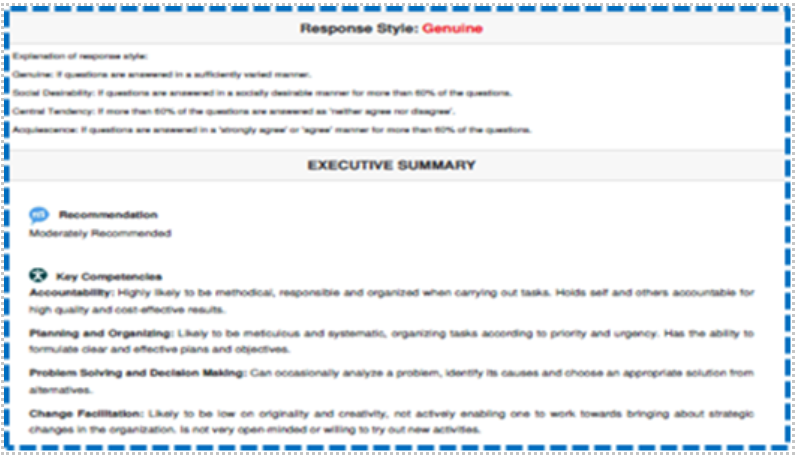
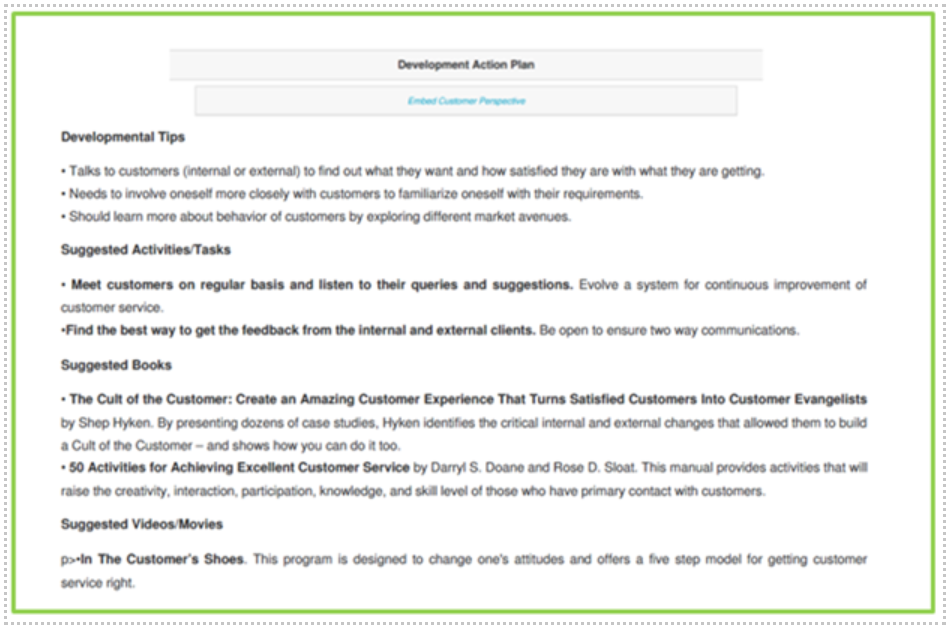
Assessment center reports serve as a benchmark for employee development plans and personnel selection. Observations about behaviors and performance are made using specifically developed assessment simulations. Further action depends on these reports’ comparison and analysis.
Here are examples of insights provided by an assessment center report:
Chapter 4: Key assessment center tools
Depending on the various forms of assessment centers, i.e., physical, virtual, or blended, and their objectives, individuals are evaluated using an array of tools and exercises. Assessment center tools help gauge fitment, readiness, or developmental needs. They can range from psychometric to situational judgment, from case studies to in-box exercises, from group discussions to business presentations.
| Personality profiler | Cognitive abilities test | Case study simulator | Presentation exercise | One-to-one role-play

Personality profiler
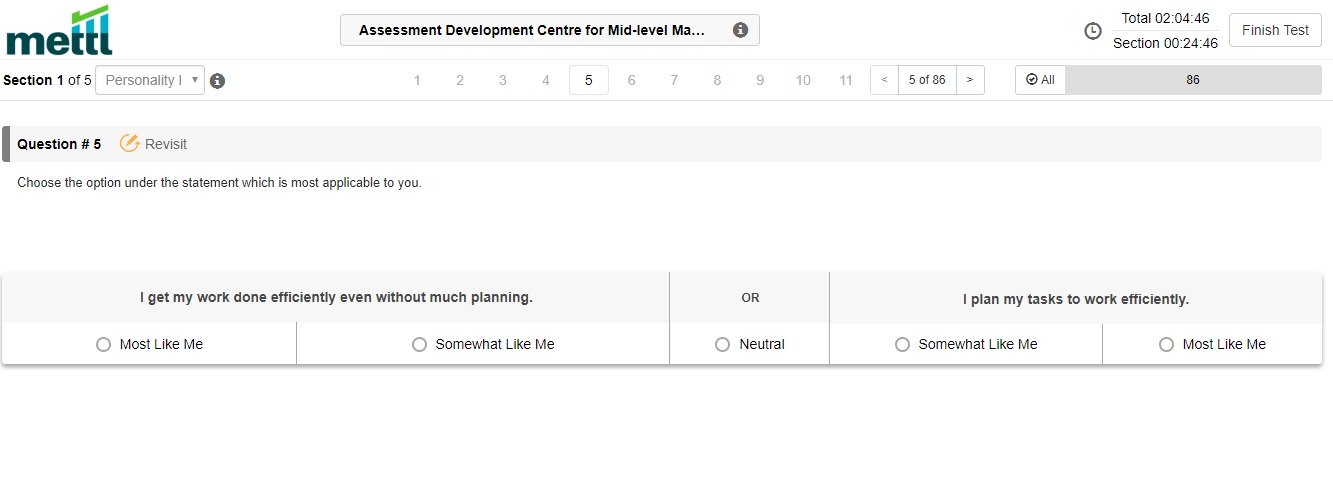
Personality Profiler is a type of assessment that helps identify personality traits and types in the candidates. It is a valid and standardized method to evaluate an individual on the Big Five traits like extraversion, agreeableness, openness, conscientiousness, and neuroticism.

Cognitive abilities test
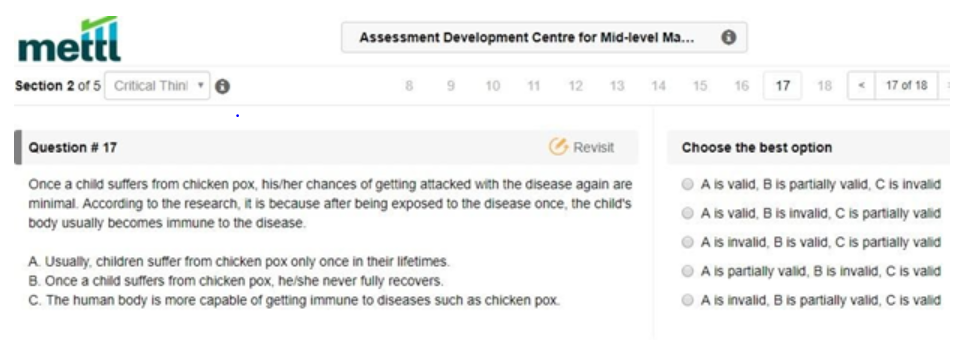
A cognitive abilities test measures a candidate’s cognitive skills such as observation, memory, visual processing, mental flexibility, critical thinking and decision-making. Several types of cognitive ability tests can help predict performance and determine a candidate’s job fitment.

Case study simulator
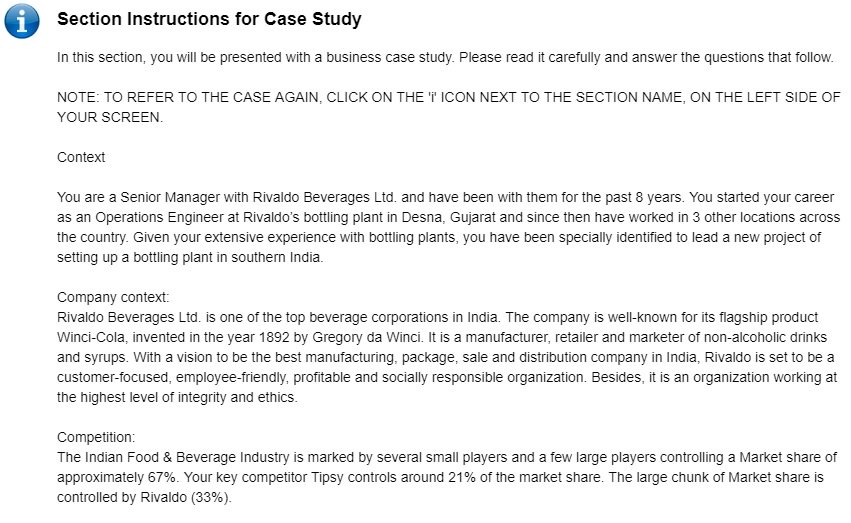
In a case study simulator, candidates look through information folders, seek answers to a few questions, and solve the problem in the available time and resources.

Presentation exercise
A presentation exercise tests candidates’ patience, ability to perform under pressure, deal with repeated questioning, and their time management skills.

One-to-one role-play
Role-plays put candidates in mock professional positions and situations. The exercise allows the assessors to test candidates’ responses and behavior with others when put in a spot. It is a useful way of assessing a candidate's social and communication skills, empathy, and the ability to influence others in job-relevant situations.
Chapter 5: Top twelve assessment center exercises
The tools highlighted in the previous chapter are essential to conducting various assessment center exercises. The latter comprise a range of interactive sessions, interview rounds and assessments to gauge the candidates’ core competencies.
Examples of these exercises are:
Chapter 6: The future of assessment development centers
As the talent management landscape continues to evolve and adopt modern technologies, human resource experts can now leverage technology to train and develop their workforce. To avoid the consequences of relying on a traditional assessment center, organizations are gradually adopting online tools to expedite the process, in addition to giving credible outcomes at par with the physical approach. Virtual assessment centers can overcome most pitfalls in physical assessments while greatly expanding the potential pool of applicants available to the organization.
A globally competitive marketplace mandates organizations to sync their strategic aims with the market requirements to ensure business continuity. Virtual assessment centers can prove to be efficient and effective in achieving the desired results. It is a time and cost-effective medium, and the assessments can be taken remotely. Meanwhile, blended assessment centers that incorporate both technological and human elements are increasingly becoming a go-to option for vital organizational planning initiatives.
The role of assessment centers in organizations is constantly growing. From hiring to using assessment centers in performance appraisals, companies are constantly experimenting with the online assessment center platforms and tools.
Moreover, organizations are increasingly undertaking the assessment center approach due to the following reasons:
How Mercer | Mettl can help
Mercer | Mettl is committed to the evolving needs of talent management and development. Thus, we offer two methodologies for conducting hassle-free assessment centers – virtual and blended. With subject matter experts, a pool of experienced assessors, and a suite of interactive tools and exercises, Mercer | Mettl can play a significant part in the hiring, training and development of your workforce.
FAQs
What is an assessment center example?
What are the tips to ace assessment center exercises?
What to expect from an assessment center?

Assessment Center Development Center, commonly known as ACDC, is a comprehensive tool used by organizations to evaluate prospective or current employees for workforce management and planning. ACDCs can be implemented virtually, physically, or in a blended format, using a suite of assessment tools.




Get awesome marketing content related to Hiring & L&D in your inbox each week
Stay up-to-date with the latest marketing, sales, and service tips and news
By using our offerings and services, you are agreeing to the Terms of Services and License Agreement and understand that your use and access will be subject to the terms and conditions and Privacy Notice